Why WordPress Updates Are a Nightmare for Site Owners — and Why SaaS Is the Smarter Future
For millions of businesses, WordPress started as freedom. Install a theme, add a few plugins, and suddenly you had a powerful website without hiring a full engineering team. But as WordPress sites grow—especially those running LMS platforms, membership systems, or eCommerce—the freedom quickly turns into fragility. And nowhere is that more obvious than during updates.
The Update Domino Effect
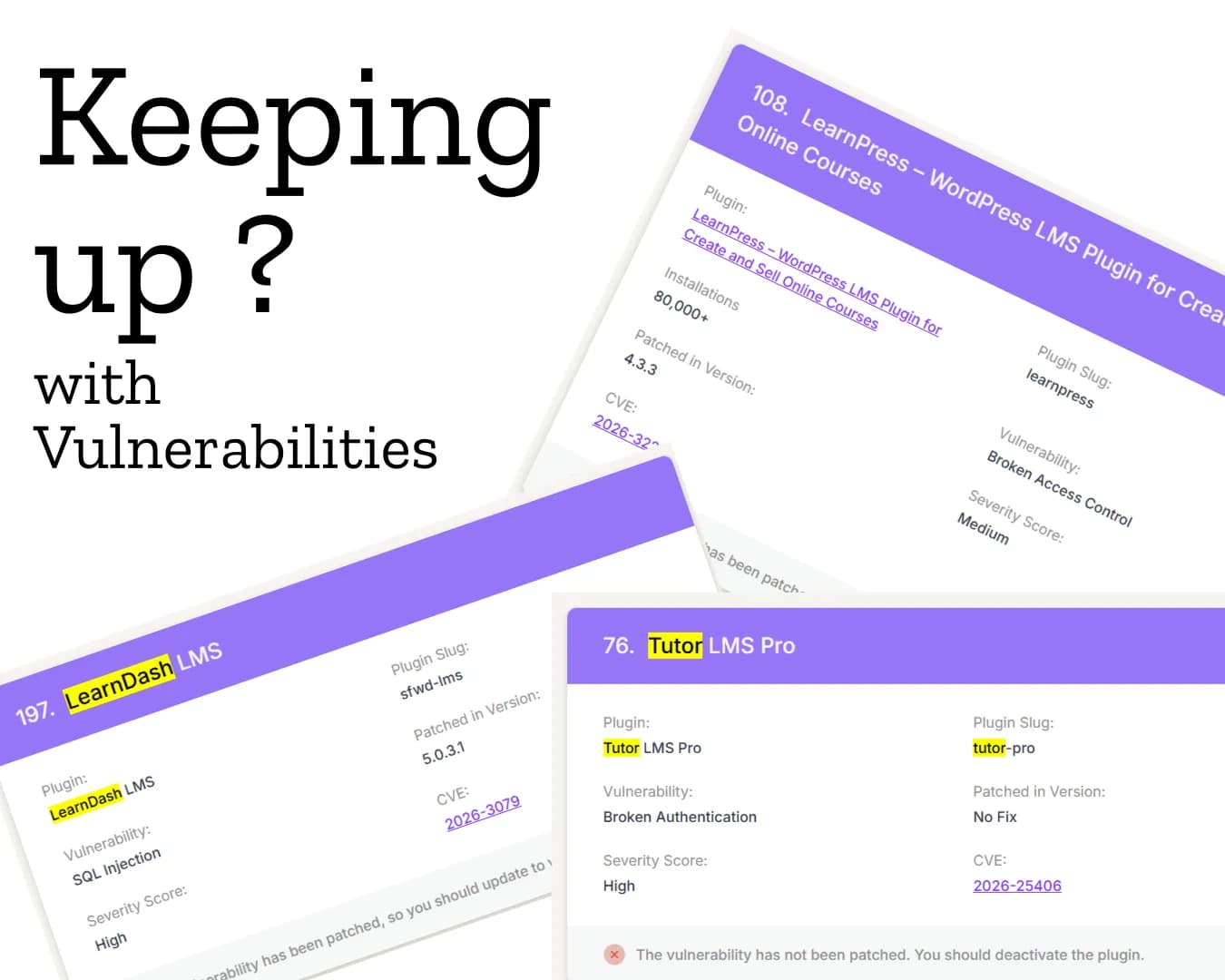
On paper, updates are good. They improve security, patch vulnerabilities, and add features. In reality, they are one of the biggest recurring stress points for site owners.
Update WordPress core → your theme breaks.
Update a plugin → another plugin conflicts.
Update PHP on the server → half your site stops working.
Ignore updates → security risk increases.
It becomes a domino effect.
When you run a complex LMS stack—WordPress + LearnDash + ProPanel + membership plugins + payment gateways + analytics tools—every update becomes a gamble. You don’t know what will break. And when something does break, it’s rarely obvious. It might be a checkout form failing silently, student progress not saving, or SCORM packages refusing to load.
Now imagine running this while trying to grow a real business.
The Hidden Cost of “Premium” WordPress
WordPress itself is free. That’s the hook.
But serious functionality is not.
Want a professional LMS?
LearnDash license.
Want reporting dashboards?
ProPanel.
Want memberships?
Another premium plugin.
Want marketing automation?
Another plugin.
Want advanced quizzes, assignments, certificates?
Add-ons.
Each one costs money annually. And not small money. When you stack them up, you’re often paying hundreds—or even thousands—per year just to keep functionality working. And that doesn’t include:
Hosting costs
Backup services
Security plugins
Developer time
Emergency fixes when updates break things
Suddenly “cheap WordPress” is not cheap.
It’s fragmented, unpredictable, and operationally heavy.
The Real Problem: Maintenance Over Growth
Most site owners don’t want to manage dependencies. They want to:
Create content
Serve customers
Improve courses
Grow revenue
But WordPress forces you into maintenance mode.
Instead of focusing on business strategy, you’re Googling conflict errors, rolling back plugin versions, or waiting for developers to respond. Every update window becomes anxiety.
That’s not scalable.
Why SaaS Changes the Equation
A properly built SaaS platform flips the responsibility model.
You don’t update servers.
You don’t manage plugin compatibility.
You don’t debug version conflicts.
You don’t worry about PHP upgrades.
The platform provider handles infrastructure, security patches, dependency updates, and performance optimization behind the scenes.
You log in. It works.
That predictability is what growing businesses need.
Stability Is a Feature
When you move to SaaS, you’re not just buying software—you’re buying stability.
One tightly integrated system
No plugin patchwork
No update roulette
No hidden integration surprises
And because SaaS platforms are purpose-built, features that would require multiple premium plugins in WordPress are often bundled into one coherent system.
No extra dashboards to buy.
No premium add-ons to unlock basic functionality.
No recurring plugin stacking.
It’s simpler—and often more cost-effective over time.
The Peace of Mind Factor
The biggest difference isn’t technical. It’s psychological.
WordPress owners live in reactive mode.
SaaS users live in growth mode.
When you remove update anxiety, you free mental bandwidth. You stop worrying about breaking your site. You stop postponing updates out of fear. You stop budgeting for emergency fixes.
That peace of mind compounds over time.
WordPress Isn’t Bad—It’s Just Not Designed for Everything
WordPress is brilliant for blogs, content marketing sites, and lightweight setups. But for complex, revenue-generating LMS platforms or membership ecosystems, the plugin-based architecture introduces fragility.
At some scale, SaaS becomes less about convenience and more about operational maturity.
You’re not abandoning WordPress because it failed.
You’re outgrowing it.
Keep reading

Why It’s Time to Move On from BuddyPress and BuddyBoss — and Build Communities Without WordPress
We Replace BuddyPress for Education-First and Memb
# Still Running Your Business on WordPress? Here’s the Security Risk No One Talks About
In 2025 alone, the WordPress ecosystem saw 11,334